Most people jump straight to biodegradable materials1 when they think about eco-friendly spice packaging wholesale. They skip the most important question: will this package actually protect my spices?
The best practices for spice packaging prioritize barrier performance2 first, then work backward to sustainable solutions. Your packaging must protect against moisture (85%+ humidity), oxygen, and light for 120+ days while maintaining volatile oil integrity. Test samples in actual tropical conditions for six months, not just lab certifications. Smart operators use multi-layer structures3 with aluminum barriers inside paper exteriors—this protects premium spices from degradation while meeting eco-friendly expectations.

I’ve watched three startups burn through investor cash on beautiful kraft pouches that couldn’t protect turmeric for 90 days. The paprika faded within weeks on retail shelves. The $200K orders got rejected. This happens because people obsess over sustainability marketing while missing the brutal truth about spice protection.
Why Does Barrier Performance Matter More Than Eco-Friendly Materials?
You want sustainable packaging. I understand that. Your customers demand it. But here’s what nobody tells you at packaging trade shows.
Barrier performance determines whether your spices reach customers with full potency or as expensive dust. Spices contain volatile oils4 that evaporate when exposed to oxygen. Moisture causes clumping and mold growth. Light degrades color compounds in paprika, turmeric, and saffron. A package that fails in any of these areas destroys product quality regardless of how recyclable it is.
 "Failed spice packaging showing color degradation")
I test packaging samples in Chennai warehouses during monsoon season. The humidity hits 85% for months. I also test in Miami distribution centers where temperature swings stress package seals daily. Most suppliers can’t answer this question: "Show me failure rates at 85% humidity over 120 days with volatile oils."
They’ve never tested beyond European climates. But spices don’t grow in Europe. They grow in India, Vietnam, and Indonesia—places with intense heat and humidity.
The Real Cost of Package Failure
One of my clients lost a major retail contract because their premium saffron arrived as faded threads. The beautiful compostable film looked perfect on the shelf. But it had poor oxygen barriers. The saffron oxidized within six weeks.
Another client used kraft paper stand-up pouches for cumin powder. The pouches felt thick and sturdy. The supplier showed certifications for recyclability5. But the paper absorbed moisture6 from the air. The cumin clumped into unusable rocks within 90 days of manufacturing.
These failures cost more than money. They destroy customer relationships7 and brand reputation.
What Separates Winners from Losers
Successful spice packaging starts with understanding your specific product needs:
Oil Content: Spices like cardamom and fennel have high volatile oil content. They need better oxygen barriers than low-oil spices like turmeric powder.
Particle Size: Ground spices expose more surface area to air than whole spices. They degrade faster without proper protection.
Target Shelf Life: Retail spices need 18-24 month shelf life8. Bulk wholesale needs 12+ months before even reaching the packer.
Storage Conditions: Will your spices sit in climate-controlled warehouses9 or hot shipping containers crossing the Pacific?
I recommend different flexible packaging solutions based on these factors. A stand-up pouch with aluminum layer10 works for high-oil spices like cinnamon. A kraft paper bag with inner aluminum foil layer protects turmeric while looking eco-friendly. Side gusset bags with degassing valves work for freshly ground spices that release CO2.
How Do You Test Packaging Before Committing to Large Orders?
Most packaging suppliers show you lab test reports. These reports measure oxygen transmission rates and water vapor permeability. The numbers look scientific and convincing.
Effective packaging testing11 requires real-world conditions over extended periods. Request samples and fill them with your actual spices—not coffee or flour substitutes. Store half the samples at 85% relative humidity and 35°C for 120 days. Store the other half through temperature cycles: 5°C to 40°C every 48 hours for 90 days. Then evaluate color retention, aroma strength, and moisture content against control samples.

The Aluminum Layer Controversy
Here’s where sustainability marketing clashes with product protection reality. Pure paper packaging cannot provide adequate oxygen barriers for most spices. The oxygen transmission rate is too high.
I use thin aluminum layers laminated inside paper structures. This contradicts "plastic-free" marketing messages. But it saves customer relationships when the product stays vibrant for 18+ months.
The aluminum layer is typically 6-9 microns thick. It sits between paper and a thin sealant layer. The total package weight is 95% paper and biodegradable materials1. But that 5% aluminum makes the difference between success and failure.
Some clients choose fully compostable films without aluminum. These work for short supply chains and quick turnover products. They don’t work for international shipping or long retail shelf life.
What Materials Work Best for Different Spice Categories?
The material structure depends on spice characteristics and distribution requirements. I match packaging specifications to product needs.
For whole spices with low oil content (like whole cloves, star anise, cinnamon sticks): Kraft paper stand-up pouches with inner metalized layer provide good protection. The paper gives an eco-friendly appearance. The metalized layer blocks light and reduces oxygen transmission.
For ground spices with high oil content (like ground cardamom, ground cumin, garam masala blends): Multi-layer structures with aluminum foil layer are necessary. I recommend kraft paper exterior / aluminum foil / sealant layer construction. This protects volatile oils4 for 18+ months.
For color-sensitive spices (like turmeric, paprika, saffron): Light blocking is critical. Use opaque materials or add an aluminum layer. Even metalized films aren’t enough—they allow some light transmission. Aluminum foil provides complete light barrier.
For moisture-sensitive spices (like ground ginger, garlic powder): Water vapor barriers matter more than oxygen barriers. Use thicker sealant layers with better moisture resistance. Consider desiccant packets inside the package.
Flexible Packaging Options I Recommend
My product range focuses on flexible packaging solutions that balance protection with sustainability:
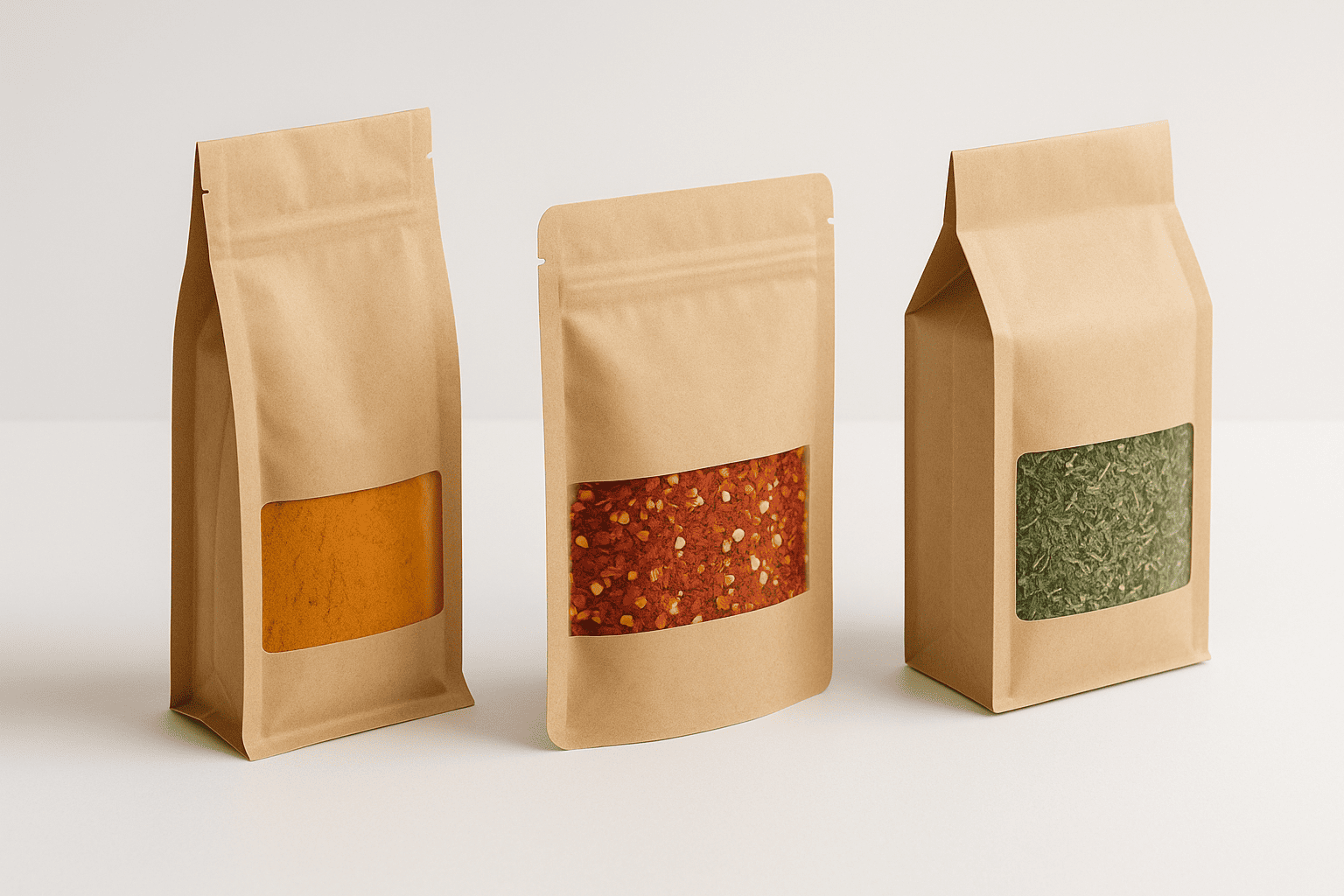
Stand-up pouches with zipper closures: These work well for retail spice packaging. The flat bottom provides shelf stability. The zipper allows resealing after opening. I use kraft paper exterior with aluminum layer for premium spices.
Flat bottom bags (block bottom bags): These offer more internal volume than standard stand-up pouches. They’re ideal for bulk spice packaging—500g to 5kg sizes. The flat base prevents tipping during filling and storage.
Side gusset bags: These traditional coffee bag styles work excellently for whole spices. The gussets expand to accommodate product volume while maintaining a slim profile when empty. This saves shipping costs.
Three-side seal bags: The most economical option for simple packaging needs. I recommend these for food service bulk spices where appearance matters less than protection and cost.
Quad seal bags: These provide excellent standing stability and premium appearance. The four vertical seals create a box-like shape. They’re perfect for gift sets or premium retail spice blends.
How Do You Balance Sustainability Claims with Actual Product Protection?
This is where most spice businesses struggle. Marketing wants to claim "100% compostable packaging." Operations knows the product won’t survive the supply chain in those materials.
Balance sustainability with protection by using hybrid structures that maximize renewable content while maintaining critical barriers. A package that is 85% paper with a 15% barrier layer is better than 100% compostable packaging that fails. Failed packages create more waste than functional packages with minimal non-renewable content.
I help clients develop honest sustainability messaging12. Instead of claiming "plastic-free" when you have a thin PE sealant layer, focus on "95% renewable content" or "recyclable through store drop-off programs."
Material Structure Transparency
Customers appreciate honesty about material composition. I print simple diagrams on package backs showing the layer structure:
- Outer layer: Kraft paper (70% recycled content)
- Barrier layer: Aluminum foil (9 microns)
- Inner layer: Bio-based PE sealant
This transparency builds trust. It shows you prioritize product quality while maximizing sustainable content where possible.
End-of-Life Considerations
Different materials require different disposal methods. I help clients provide clear disposal instructions:
For kraft paper with aluminum layer packages: These aren’t home compostable, but many communities accept them in metal recycling streams. The paper can be separated and composted after use.
For fully compostable packages: These require commercial composting13 facilities. Only recommend these if your customers have access to such facilities.
For recyclable packages: Provide clear instructions about removing labels or emptying completely before recycling.
What Are the Most Common Mistakes in Spice Packaging for Wholesale?
I see the same mistakes repeatedly. They’re expensive and preventable.
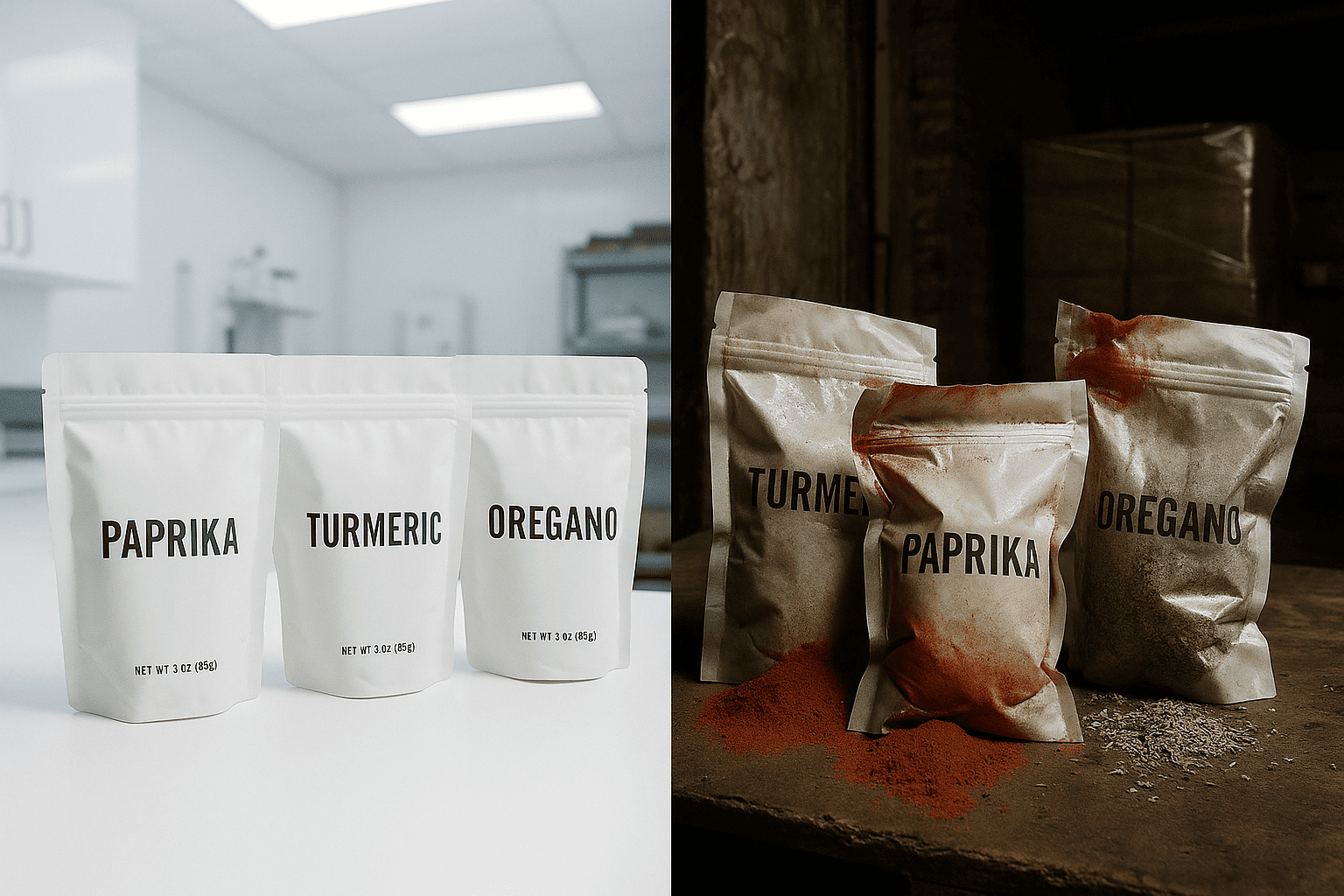
The biggest mistake is choosing packaging based on supplier sales pitches instead of testing data. Beautiful packaging samples don’t predict six-month performance under stress. The second biggest mistake is ignoring climate-specific requirements for your distribution network.
Mistake #1: Trusting Lab Certifications Over Field Testing
Suppliers show certificates from European testing labs. The package passes all tests at 23°C and 50% relative humidity. But your spices ship through the Panama Canal at 40°C. They sit in Mumbai warehouses at 90% humidity.
Those lab conditions don’t predict real performance. I always request samples for field testing before committing to large orders.
Mistake #2: Choosing Inadequate Seal Methods
Heat seals fail more often than film barriers. The seal strength14 decreases when exposed to heat during storage and shipping. The adhesive breaks down. Micro-perforations develop along the seal line.
I specify minimum seal widths (5-8mm for most applications) and test seal strength after thermal aging. The seal should maintain 80%+ of original strength after 90 days at 38°C.
Mistake #3: Ignoring Regional Climate Differences
A packaging solution that works perfectly in Seattle will fail in Singapore. The humidity difference is dramatic. Water vapor transmission through the package doubles with each 10°C temperature increase.
I ask clients: "Where will your spices be stored? Where are your customers located?" Then I specify materials appropriate for the worst-case scenario in that distribution network.
Mistake #4: Overlooking Fill Weight and Package Size Matching
Empty space inside the package allows air circulation. This accelerates oxidation. Spices settle during shipping, creating more headspace.
I recommend filling packages to 85-90% capacity. Use appropriate package sizes for your fill weights. Don’t put 100g of spices in a 250g capacity bag just because you have extra inventory.
Mistake #5: Forgetting About Volatile Oil Migration
Some spices contain oils that migrate through certain plastics. Fennel oil, cardamom oil, and cinnamon oil can penetrate polyethylene films over time. This causes seal failure and aroma loss.
I use barrier materials that resist oil migration15 for high-oil spices. Aluminum foil provides complete barrier. Certain metalized films also work well.
How Should You Approach Labeling for Wholesale Spice Packaging?
Labels carry critical information and marketing messages. But they also affect package performance.
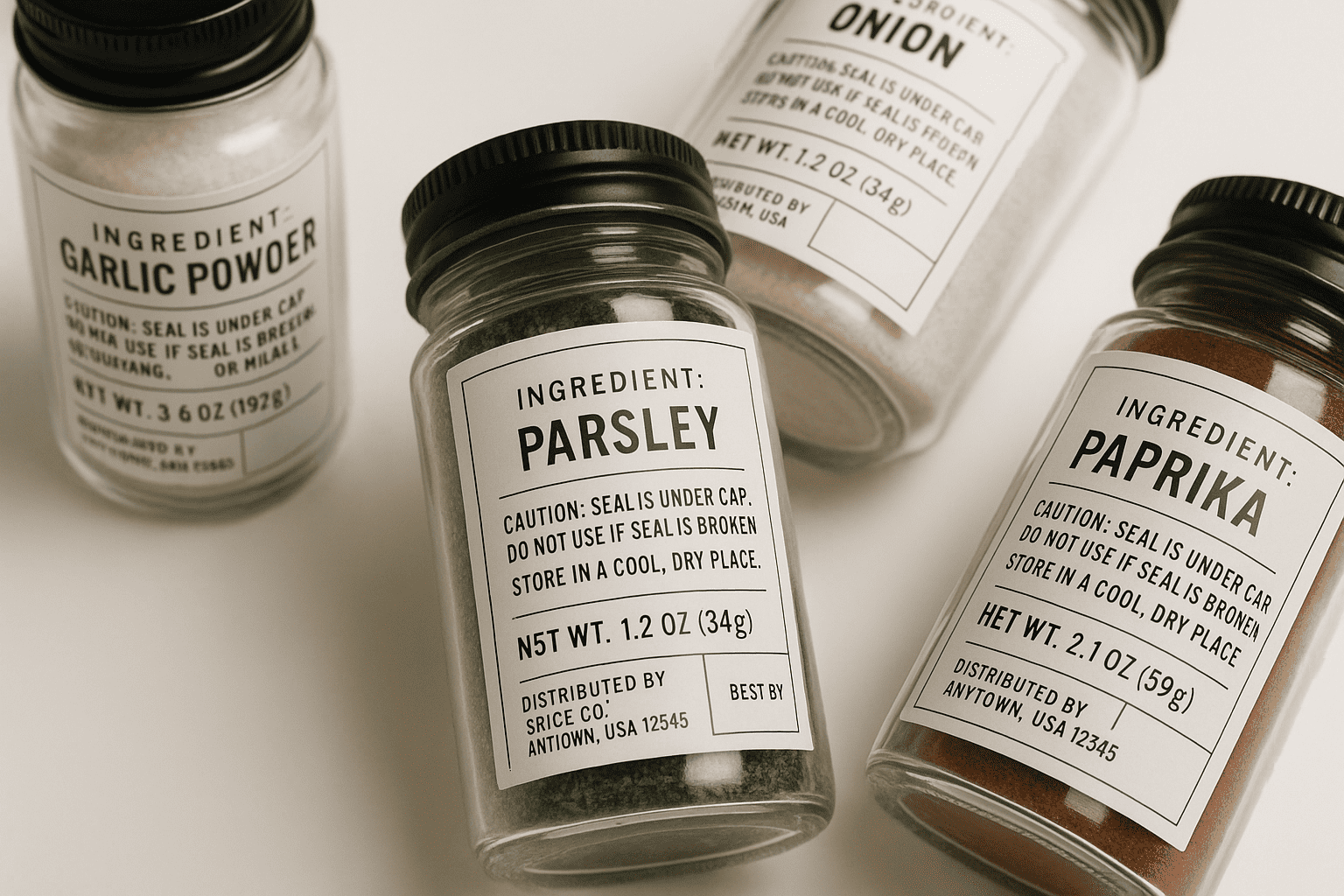
Effective spice package labeling includes required regulatory information, clear storage instructions16, and batch traceability codes17. Labels should not cover package seals or create weak points in the barrier structure. Use pressure-sensitive labels18 that maintain adhesion through humidity and temperature changes.
Regulatory Requirements by Region
Different markets require different information:
United States (FDA requirements): Product name, net weight, ingredient list (for blends), manufacturer information, allergen warnings if applicable. Country of origin for whole spices.
European Union: Similar to US requirements plus specific lot/batch codes for traceability. Additional allergen labeling requirements19.
Canada: Bilingual labeling (English and French) required. Nutritional information for consumer packages.
Australia/New Zealand: Country of origin statements required. Specific allergen declarations.
Information That Improves Customer Experience
Beyond regulatory minimums, I recommend including:
Storage instructions: "Store in cool, dry place away from direct sunlight." This helps maintain quality after purchase.
Usage suggestions: "Add to curries, soups, or marinades." This provides value for home cooks.
Harvest date or best-by date: This shows freshness and builds trust.
Origin information: "Sourced from organic farms in Kerala, India." This tells the product story.
QR codes: These link to recipes, sourcing videos, or sustainability information without cluttering the package.
Frequently Asked Questions About Eco-Friendly Spice Packaging Wholesale
1. Can fully compostable packaging protect spices for 12+ months?
Current compostable films typically provide 6-9 months of protection for low-oil spices under ideal storage conditions. High-oil spices need stronger barriers. Compostable packaging works best for short supply chains with quick product turnover. For export markets and long shelf life requirements, hybrid structures with renewable content and barrier layers offer better performance.
2. How do I reduce packaging costs without sacrificing quality?
Optimize package size to fill weight ratios—this reduces material waste. Consider side gusset bags instead of stand-up pouches for bulk sizes (they use 15-20% less material). Purchase larger quantities to get volume discounts. But never compromise on barrier requirements to save money. Package failure costs far more than the material savings.
3. What minimum order quantities should I expect for custom printed spice packaging?
Most flexible packaging manufacturers have 10,000-50,000 unit minimums for custom printing. Digital printing options exist with 3,000-5,000 unit minimums but at higher per-unit costs. I recommend starting with stock sizes and adding labels before committing to fully custom printed bags. This lets you test the market before large inventory commitments.
4. How do different closure types affect spice freshness?
Zipper closures allow resealing but create weak points for oxygen infiltration. Each time a customer opens and closes the zipper, some air enters. Tin tie closures are more economical but provide poor resealing. One-way degassing valves work well for spices that release CO2 after grinding. For single-use portions, heat seals provide the best barrier. Match closure type to usage pattern and package size.
5. Should I use oxygen absorbers or nitrogen flushing for spice packaging?
Both methods extend shelf life by reducing oxygen exposure. Oxygen absorbers work well for ground spices in small packages. They’re simple and cost-effective. Nitrogen flushing works better for whole spices and larger packages. It displaces oxygen before sealing. I recommend nitrogen flushing for premium products and export markets. Use oxygen absorbers for cost-sensitive applications.
Conclusion
The best spice packaging practices start with barrier performance, not sustainability marketing. Test samples in real-world conditions for six months before scaling production. Ask suppliers about failure rates at 85% humidity with volatile oils. Use multi-layer structures that balance protection with eco-friendly content. Your customers will forgive recyclable packaging, but they won’t forgive degraded spices.
-
Explore how biodegradable materials can enhance sustainability in spice packaging while ensuring product protection. ↩ ↩
-
Learn why barrier performance is essential for maintaining spice quality and preventing degradation. ↩
-
Discover how multi-layer structures can protect spices while meeting eco-friendly standards. ↩
-
Understand the importance of volatile oils in spices and how packaging affects their integrity. ↩ ↩
-
Explore the recyclability of different spice packaging materials and their environmental impact. ↩
-
Find out how moisture impacts spices and the importance of moisture-resistant packaging. ↩
-
Explore the connection between packaging quality and customer satisfaction in the spice market. ↩
-
Explore the factors that determine the shelf life of spices and how packaging plays a role. ↩
-
Discover how climate-controlled warehouses can preserve spice quality during storage. ↩
-
Understand the significance of aluminum layers in enhancing spice packaging performance. ↩
-
Learn the best practices for testing spice packaging to ensure it meets quality standards. ↩
-
Discover how to communicate sustainability efforts effectively to consumers. ↩
-
Learn about commercial composting and its implications for sustainable spice packaging. ↩
-
Learn why seal strength is crucial for maintaining spice freshness and preventing leaks. ↩
-
Discover the effects of oil migration on spice quality and how to prevent it. ↩
-
Learn how clear storage instructions can enhance customer experience and spice quality. ↩
-
Understand the importance of batch traceability codes for quality control in spice products. ↩
-
Explore the advantages of pressure-sensitive labels in maintaining spice packaging integrity. ↩
-
Understand the essential labeling requirements for spice packaging in different markets. ↩